Field Company
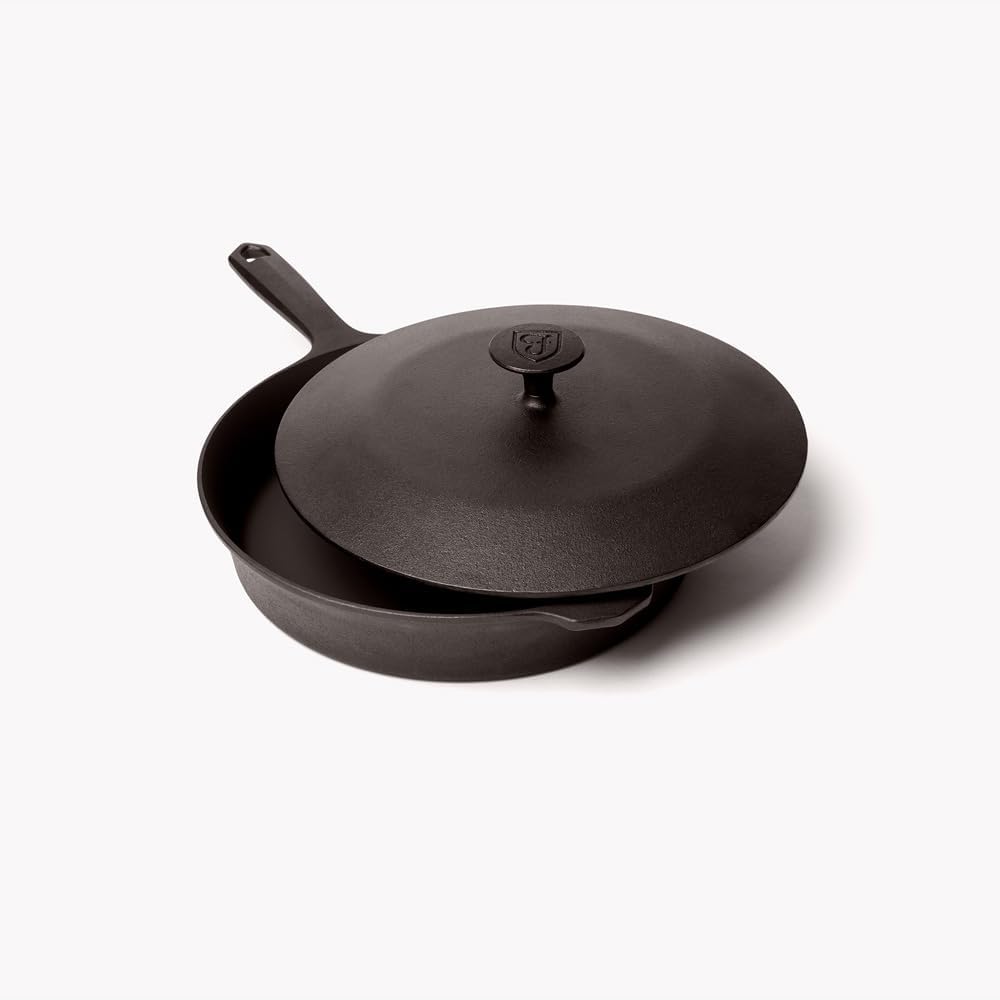
Field Company No.8 Skillet and Matching No.8 Cast Iron Skillet Lid
As an Amazon Associate I earn from qualifying purchases.
View Field Company No.8 Skillet and Matching No.8 Cast Iron Skillet Lid on AmazonYou pay the same either way.Specifications
| Model | No.8 skillet with matching lid |
|---|---|
| Material | Cast iron |
| Casting | Thinner-walled than a Lodge |
| Surface | Smooth cooking surface |
| Weight | Lighter than a classic Lodge |
Pros & cons
Pros
- Thinner casting makes it noticeably lighter to lift, tilt, and pour
- Smoother cooking surface releases food with less oil
- Matching lid adds braising and covered cooking to its range
Cons
- A more refined pan than the most basic way into cast iron
- Thinner walls hold less thermal mass than a thick Lodge, so the surface cools more when cold food hits it
Skip it if
Skip it if you want the most basic, no-frills way into cast iron, or you sear straight-from-the-fridge foods often — a thick classic Lodge holds heat better for that.
How we assessed it
We synthesized this
Field Company casts the No.8 with thinner walls than a classic Lodge, and you feel the difference the moment you pick it up: it's lighter to lift, tilt, and pour one-handed. The cooking surface is machined smooth, so food releases with less oil and cleanup stays simple, and the matching lid turns a straight skillet into a pan you can braise, steam, or cover in. It suits a cook who wants real cast iron without the heft — or the arm workout — of a thick vintage pan.
The trade-off comes with that thinner casting: less thermal mass means the surface temperature drops more when cold food hits it, so a hard sear on straight-from-the-fridge steak asks for a preheat and patience. And it's a more refined pan than the most basic way into cast iron. Our read is synthesized from documented construction and reputation, not a hands-on searing test — see how we test.