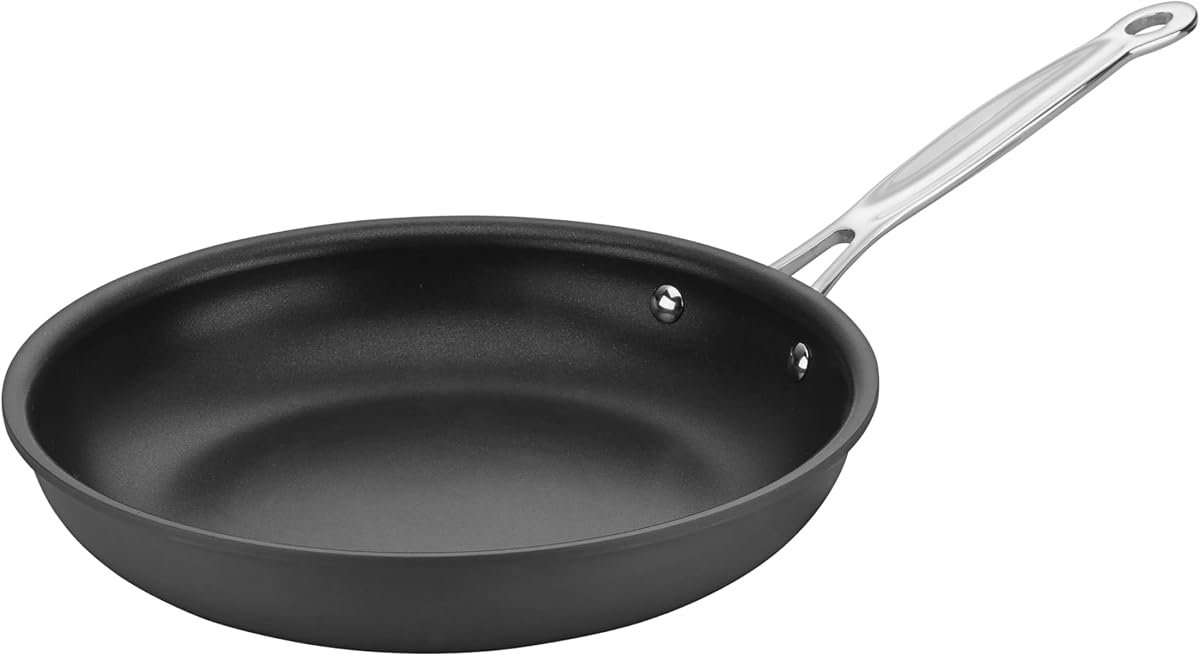
Cuisinart
Cuisinart Chef's Classic 10-Inch Nonstick-Hard-Anodized, Open Skillet
As an Amazon Associate I earn from qualifying purchases.
View Cuisinart Chef's Classic 10-Inch Nonstick-Hard-Anodized, Open Skillet on AmazonYou pay the same either way.Specifications
| Size | 10 in |
|---|---|
| Construction | Hard-anodized |
| Coating | Non-stick |
| Type | Open skillet |
| Heat behavior | Even heat distribution |
Pros & cons
Pros
- Hard-anodized body resists warping, staying flat over years of heating
- Spreads heat more evenly than lightweight stamped pans, avoiding hot spots
- Even heating suits delicate foods like eggs and crepes
Cons
- Heavier in the hand than the Tramontina or OXO pans
- Its non-stick coating rules out metal utensils and the high-heat searing bare-metal pans handle
Skip it if
Skip it if you want the lightest possible pan — the hard-anodized body is heavier than the Tramontina or OXO picks.
How we assessed it
We synthesized this
The Cuisinart Chef's Classic earns its place with a hard-anodized body: it resists warping and, being heavier than thin stamped pans, spreads heat more evenly across the surface. That even heating is exactly what delicate foods want, so eggs slide and crepes cook without scorched hot spots. It's made for a cook who makes a lot of eggs and gentle, everyday dishes and prefers a flat, steady pan over a featherweight one.
Two honest trade-offs come with that build. It's heavier in the hand than the Tramontina or OXO pans, which you'll notice when tossing or one-handing it. And its non-stick coating rules out metal utensils and the high-heat searing bare-metal pans handle. Our read is a synthesis of the documented hard-anodized construction and even-heating behavior, not a hands-on heat-mapping test — see how we test.