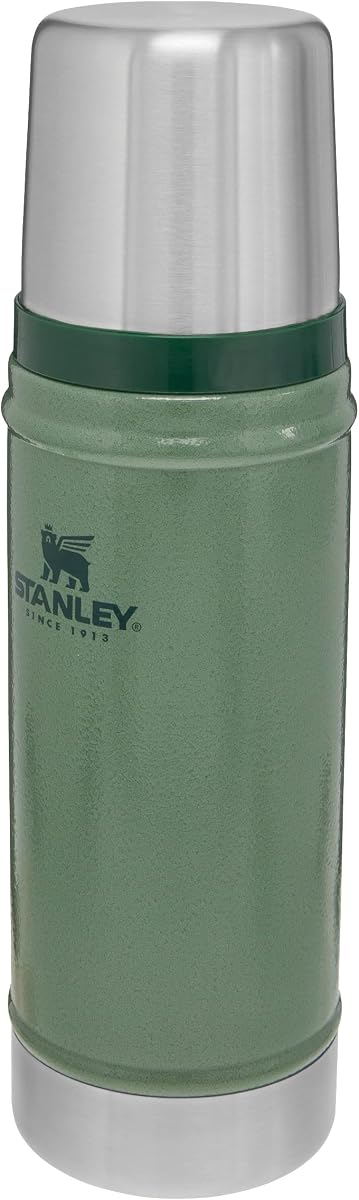
Stanley
Stanley 1913 Classic Legendary Thermal Flask 0.47L - Hammertone Green
As an Amazon Associate I earn from qualifying purchases.
View Stanley 1913 Classic Legendary Thermal Flask 0.47L - Hammertone Green on AmazonYou pay the same either way.Specifications
| Capacity | 0.47L (470ml) |
|---|---|
| Material | 18/8 stainless steel |
| Insulation | Double-wall vacuum |
| Lid | Doubles as a cup |
| Finish | Hammertone Green |
Pros & cons
Pros
- Double-wall vacuum insulation in 18/8 stainless steel keeps drinks hot for the long haul
- A compact 0.47L body slips into a jacket pocket or cup holder
- The lid doubles as a cup, and the heritage Hammertone Green finish wears its age well
Cons
- At 0.47L it is limiting for longer outings that need more than half a litre
- The vacuum build is heavier than a plain single-wall bottle
Skip it if
Skip it if you need more than half a litre for extended outdoor activities — the larger Stanley Classic 1L format suits that better.
How we assessed it
We synthesized this
Stanley's Classic flask is a small, tough companion. The double-wall vacuum build in 18/8 stainless steel is what keeps a drink hot for the long haul, and at 0.47L the body is compact enough to slide into a jacket pocket or a car cup holder rather than swinging off a rucksack. The lid doubles as a cup, and the heritage Hammertone Green finish is made to pick up scuffs and keep looking the part. It suits commuters, dog-walkers and anyone who wants one reliable hot drink to hand.
The trade-offs are size and weight. Half a litre runs short on longer outings — the 1L Classic suits those better — and the vacuum construction is heavier than a plain single-wall bottle. Our read is a synthesis of Stanley's documented construction and insulation rather than a hands-on retention test — see how we test.